Thoughtfully Rolling Out Brand Guidelines in Interior Design

At A Designer at Heart, we often work with clients who already have a clear interior design guideline in place. Whether it’s for a brand-new development or a refurbishment project, our role is to take that vision and make sure it comes to life—beautifully, practically, and in a way that genuinely works for the space.
But for us, it’s never about copying and pasting a template. It’s about understanding the brief and the building first and then tailoring the design so that it feels right—not just in terms of look and feel, but how it works day-to-day for the people who’ll be using it.
It Starts with Listening
When there’s an existing design guideline, our first step is always to dig in and understand it fully. If we can, we start with site visits and early conversations with the client. These help us understand the ambitions behind the brief and pick up the little details that can make a big difference.
In refurb projects, we also try to speak to people already using the space—students, staff, and the wider client team. Their input helps us see what’s working, what’s not, and what really matters to them.
We’re not just looking for surface-level feedback—we’re trying to spot patterns, priorities, and practical needs. And we always make sure to align with the client’s operational goals so that the final design supports both well-being and efficiency.
Layout First
Once we’ve got a clear picture of what’s needed, we move into layouts. This stage is crucial—it’s where most of the key decisions are made.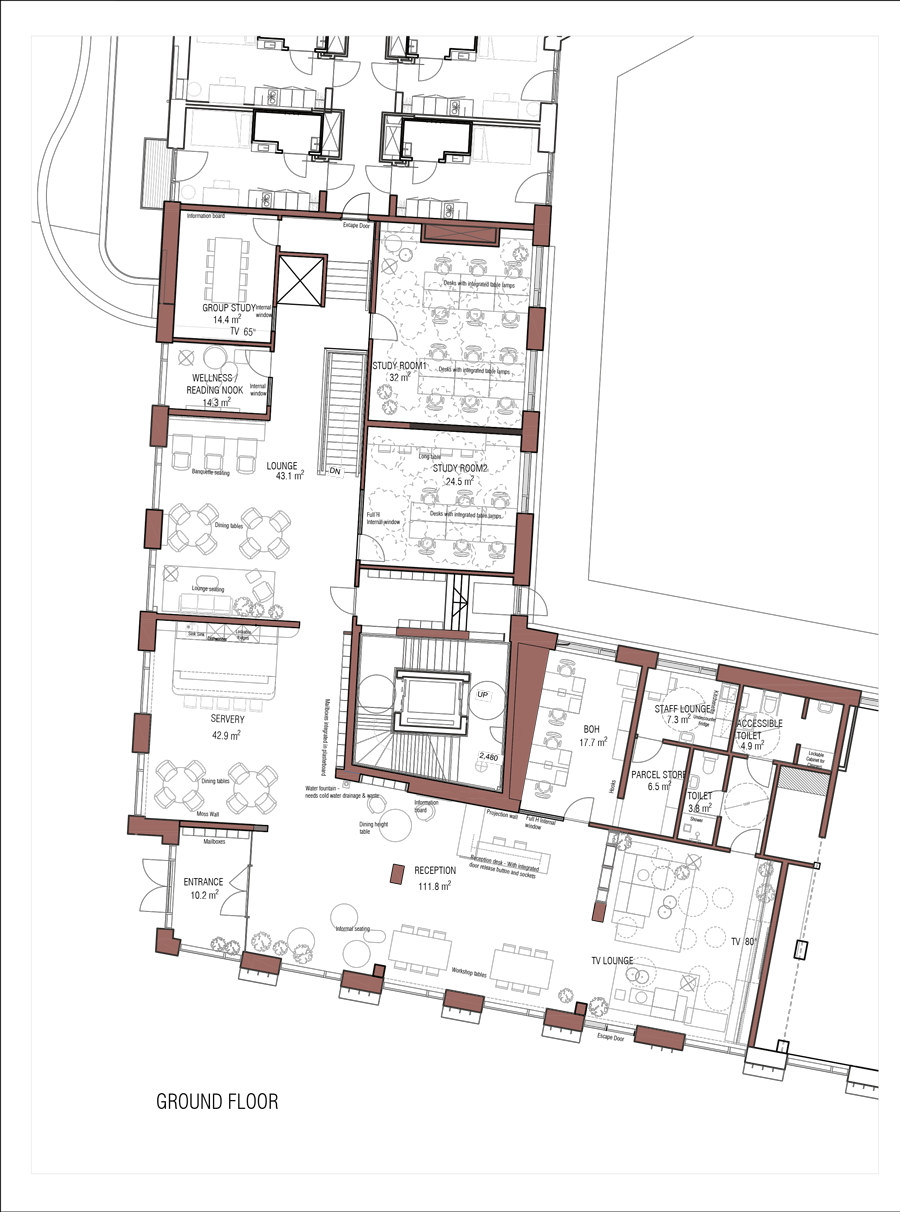
We start with the client’s prototype and adapt it to fit the specific project. That means making sure spaces flow well, feel natural to use, and meet the needs of students and staff. On refurbishment projects, we also work closely with the wider team to understand any site restrictions or technical constraints and factor those in early.
Getting this right at the start helps everything else fall into place.
Bringing It All Together
With the layout agreed, we move into the creative details—colours, finishes, materials, and furniture. This is where we can really reflect the brand’s identity in a meaningful way.
Every project is different, so we always take a bespoke approach. We don’t just apply the brand guideline—we interpret it in a way that fits the space, the people, and the purpose.
For refurbishments, we’re also mindful of sustainability. If there’s anything we can reuse, repurpose or refresh—while still staying true to the design intent—we absolutely will.
It’s More Than Just Following Guidelines
Rolling out a brand guideline properly means more than sticking to a formula. It’s about listening, questioning, adapting, and designing with intent.
That’s how we create spaces that feel cohesive, work for the long term, and stay true to what the brand stands for—while also meeting the real needs of the people who’ll live, study, or work there.
Curious to see how that comes to life? Explore our portfolio.

Comments
latest


